Tag: LLM
-
How to Learn Mechanistic Interpretability Without a PhD: A Self-Taught Developer’s Path
A five-stage path from zero to contributing in mechanistic interpretability, for working developers with no research background: Neuronpedia in the browser, a transformer from scratch, the ARENA curriculum, reproducing one real result, then SPAR or MATS. The tools, the habits, and how much maths you actually need.
-
Circuit Tracing: How Researchers Follow an AI’s Thoughts Step by Step (The Marble Run Explanation)
Circuits and attribution graphs let researchers watch a model plan a rhyme, add 36 + 59 in an unexpected way, and sometimes invent a story about its own reasoning. How circuit tracing works, the three most quoted findings, what it cannot do yet, and how to try it at home, explained with a marble run.
-
Neurons, Features and Superposition: Why an AI’s Neurons Don’t Mean One Thing Each (The Toy Box Explanation)
Researchers expected each neuron in an AI model to mean one thing. Instead, most mean many things at once. Neurons, features, superposition and the sparse autoencoder, the tool that untangles them, explained with a jumbled toy box and 500 cups. Plus what you can see for yourself on Neuronpedia.
-
Why Should You Care About Mechanistic Interpretability? 7 Reasons for Founders, Developers and Curious Humans
You are already trusting a machine nobody can inspect. Seven plain-English reasons to learn the basics of mechanistic interpretability: debugging AI features, catching a bluffing model, enterprise and regulatory questions, steering, reading AI news, a field you can start this weekend, and the question of minds.
-

What Is Mechanistic Interpretability? Looking Inside an AI’s Head, Explained Like You’re Six
Nobody fully understands how the AI models we use every day work, not even the people who built them. Mechanistic interpretability is the science of opening them up and finding out. What it is, the Golden Gate Bridge experiment, what researchers have found so far, and why it matters, explained with examples a six-year-old could…
-

Adding AI Features to a Vibe-Coded App: Cost Control, Prompt Injection and the Three Ways It Goes Wrong
“Summarise this” is the magic feature — and the one that can empty your account overnight, leak another user’s data through a chat box, or get your provider account suspended. Twelve controls for the three failure modes AI features have that ordinary features don’t, plus the audit prompt to run on your own code.
-

10 MCP Use Cases That Actually Ship: What Companies Connect AI to First
Past the demos, a clear pattern has emerged in what companies actually connect AI to first — and which MCP use cases quietly pay for themselves. Ten that ship, what each needs, and the one property nine of them share.
-
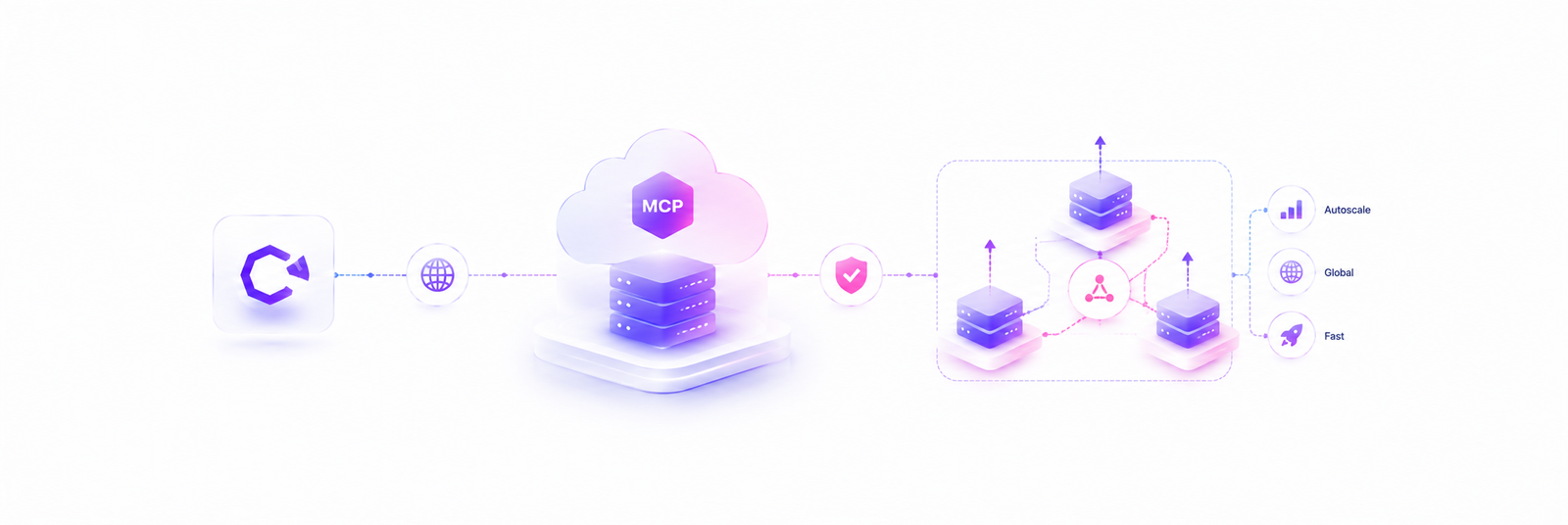
Remote MCP Servers: Deploying, Hosting, and Scaling Them After the Stateless Shift
Local MCP servers were fine when one developer used them. The moment a team — or your customers — need access, you’re deploying a remote server. Hosting options, auth requirements, and why the stateless spec just made this dramatically cheaper.
-

The MCP Servers We Actually Use with Claude Code (and the Ones We Turned Off)
Claude Code gets most of its leverage from what it can reach. The MCP servers that earn a place in our agency’s daily setup, how we configure them per project, and why we’ve removed more servers than we’ve added this year.
-

MCP vs API: What’s Actually Different, and Why You’ll End Up With Both
MCP doesn’t replace your APIs — it sits on top of them and solves a different problem: letting an AI model discover and use your systems without custom integration code. The real differences, the false dichotomy, and a decision rule for when each applies.