HealthTech

Subscription Monetization for Digital Health Apps: RevenueCat, Compliance, and What HIPAA-Adjacent Products Need to Know

7 min read | HealthTech · Subscriptions

Telehealth, chronic-care tracking, wellness coaching — a growing share of digital health products run on recurring revenue, and the billing infrastructure decision looks, on the surface, identical to any other subscription app. It isn’t quite. The moment a subscriber record can be linked back to a health condition, a care plan, or a diagnosis, you’re no longer just managing churn — you’re managing a compliance surface too.

This is not legal advice, and we say that deliberately: compliance counsel should review your specific data flows. What we can speak to is the technical side — where subscription infrastructure like RevenueCat fits cleanly, and where it needs deliberate handling in a health context.

1. Where Billing Data and Health Data Overlap

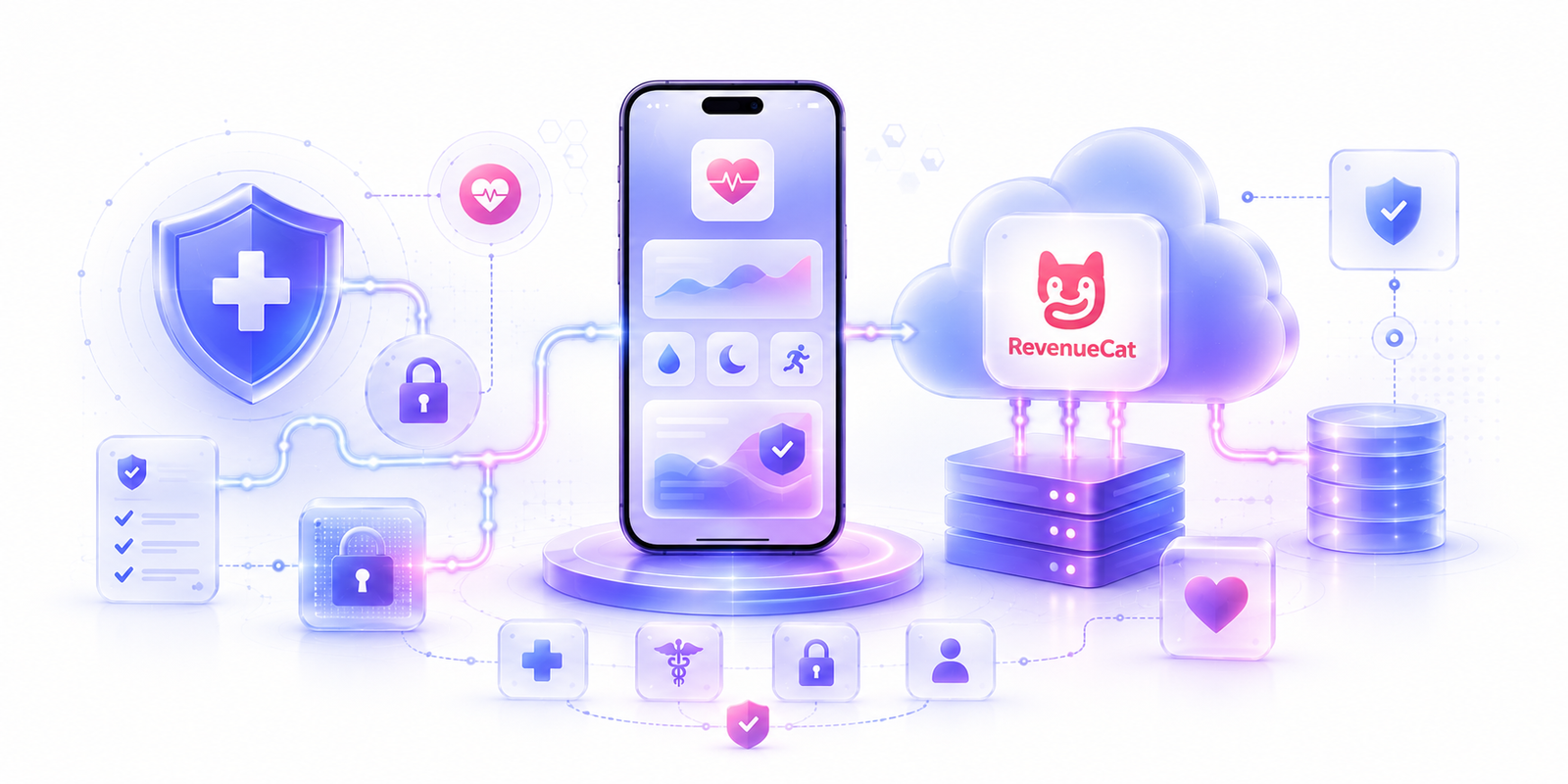
On its own, subscription billing data — an email, a plan tier, a renewal date — is not health information. It becomes sensitive the moment it can be correlated with clinical data: if your RevenueCat user ID is the same identifier used in your clinical records, or if a subscription tier name reveals a diagnosis (“Diabetes Care Plan — Premium”), the billing layer has effectively become part of your PHI boundary.

1
Use a pseudonymous app user ID, not your clinical patient ID
RevenueCat’s app user ID should be a value with no meaning outside your own systems — never a medical record number or a value that appears in clinical notes.
2
Keep health data out of RevenueCat’s attributes and metadata
Custom subscriber attributes are convenient for segmentation, but they are not a place to store diagnosis, treatment, or condition data. Treat that field the way you’d treat an analytics event property.
3
Name products and entitlements around features, not conditions
“Premium,” “Care Team Access,” “Unlimited Sessions” — not the name of a diagnosis or treatment. This protects users even in analytics dashboards and support tooling downstream.
4
Review the BAA status of every connected integration
If you pipe RevenueCat events into an analytics or messaging tool, check whether that specific integration is covered under a Business Associate Agreement before any health-adjacent context flows through it.

2. The Subscription Models We Actually See in Health Apps

💪
Freemium + premium coaching
Free tracking, paid access to coaching, personalized plans, or advanced insights. Lowest compliance complexity — closest to a standard consumer subscription.
🩺
Provider-gated care plans
Access to a tier is gated by a clinician or care team decision, not just payment. Entitlements need to reflect clinical state, not only billing state.
👪
Family / caregiver plans
One subscription, multiple linked profiles — common in eldercare and pediatric health apps. Requires entitlement sharing logic RevenueCat supports but doesn’t design for you.
🏢
B2B2C, employer or insurer sponsored
The end user doesn’t pay directly — a benefits sponsor does. This usually sits outside standard app-store billing entirely and needs a separate entitlement path.

3. What RevenueCat Handles vs. What Stays Yours

RevenueCat handles
Store billing & receipt validationYes
Trial and renewal lifecycleYes
Cross-platform entitlement stateYes
Revenue & churn reportingYes
Stays your responsibility
Clinical eligibility & provider gatingCustom
PHI boundary & data segregationCustom
Insurer / employer-sponsored accessCustom
Compliant support & refund flowsCustom
Where we draw the line

We build the technical layer — entitlement architecture, ID hygiene, integration review — and we flag where a decision needs your compliance counsel’s sign-off. We don’t sign off on HIPAA compliance ourselves, and any vendor who offers to should be treated as a yellow flag, not a shortcut.

If the app itself — not just the billing layer — is early-stage, our six-week MVP shape with Claude Code covers how we sequence that work generally, and the monetization layer slots in during the hardening weeks, not week one.


Building a subscription model for a health or wellness product?

Tell us the shape of your care model — direct-to-consumer, provider-gated, or sponsored — and we’ll map the entitlement architecture before any code gets written.

Start the Conversation →

Engineering Insights

Latest from Syntaxa Studio.

Loading latest posts