In-House Dev Team vs. Software Agency in 2026: An Honest Comparison
One of the most consequential decisions a founder or product leader makes is not what to build — it’s who builds it. The choice between hiring an in-house engineering team and engaging a software agency is neither straightforward nor permanent, and the right answer changes depending on where you are in your company’s lifecycle.
This is an honest breakdown of both models — the real advantages, the real risks, and the conditions under which each one makes sense in 2026.
1. The Core Trade-off
The fundamental difference comes down to speed versus depth of context. An agency can ship faster in the short term because the team, processes, and tools are already in place. An in-house team builds deeper product context over time and becomes increasingly efficient as it learns your domain — but only after a ramp period that typically takes 3–6 months per engineer.
2. What an Agency Actually Costs vs. In-House
The most common mistake when comparing the two is comparing the agency day rate to a salary and stopping there. The full cost of an in-house engineer — when you include employer taxes, benefits, equipment, recruitment, management overhead, and the cost of open headcount during hiring — is typically 1.5–2× the base salary.
A mid-level full stack engineer in Western Europe or the US costs $120k–$160k in total compensation. An agency senior engineer at $1,000/day works out to $220k/year at full utilisation — but you scale down when scope is finished. For bursts of delivery, the agency is often cheaper. For sustained product development, in-house wins on cost.
3. The Hybrid Model Most Companies Land On
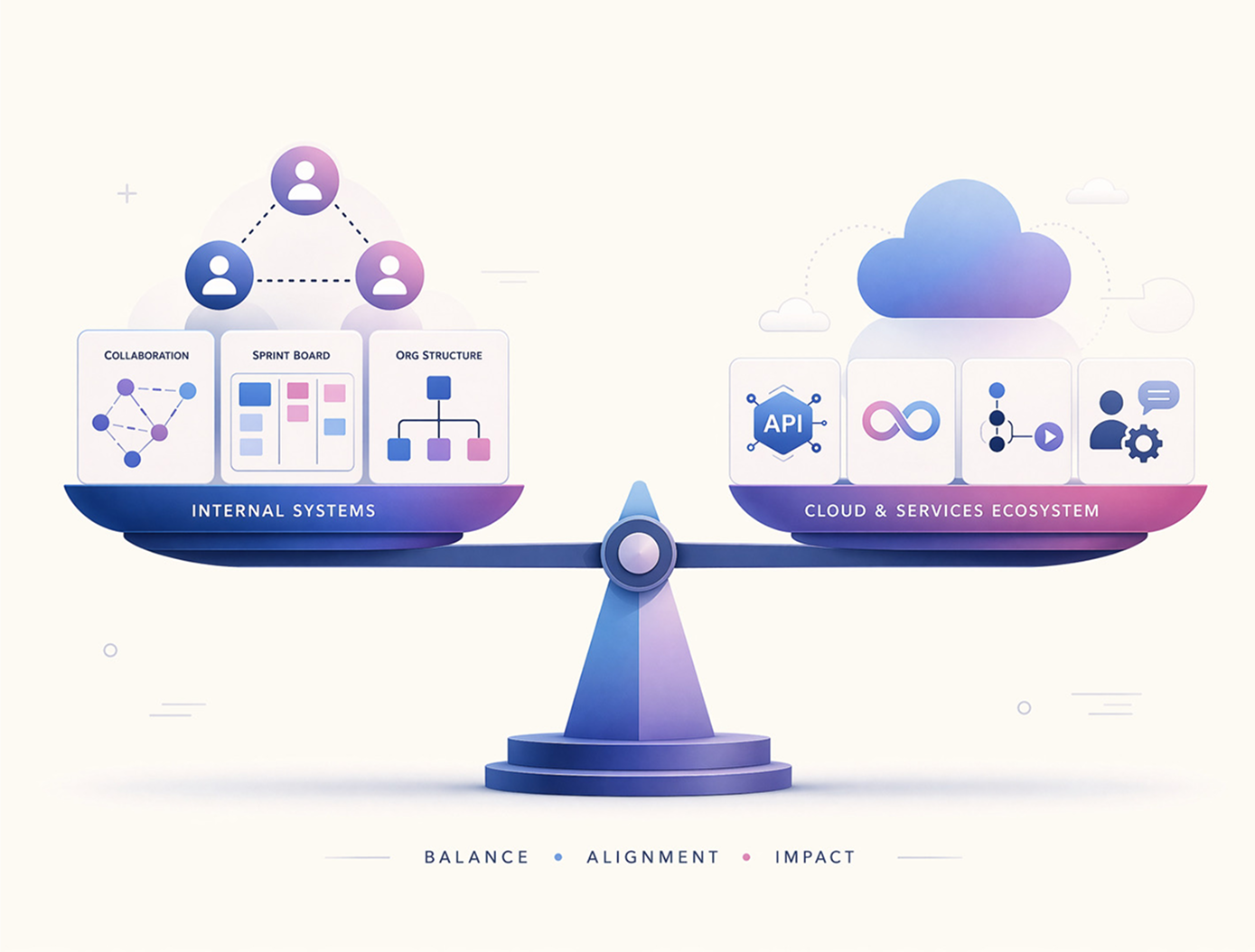
In practice, the highest-performing product teams in 2026 are neither purely in-house nor purely agency. They use a core in-house team for product ownership and long-term architecture decisions, and an agency relationship for:
4. When to Choose an Agency
An agency engagement makes clear strategic sense when: you need to ship faster than hiring allows; you are pre-PMF and don’t yet know what you are building; you need a specific technical capability (mobile, ML, complex integrations) on a time-limited basis; or you want a production-quality codebase that your eventual in-house team can inherit and maintain.
If you are evaluating a software agency, our guide on how to brief a development agency walks through exactly what to look for in the process — and the red flags that predict a wasted first month. And if you are close to shipping but stuck on the final stretch, read about how Claude Code can accelerate the last mile of an MVP.
A third option for founders who build with AI: keep prompting, add a senior engineer for review and the risky parts — vibe coding vs hiring a developer.
Raising or selling to enterprise with an AI-built product? The 12 technical-diligence questions you’ll be asked, and what a good answer sounds like.
Let’s talk about what’s right for your situation.
Syntaxa works with founders, product leaders, and internal teams who need honest advice about how to build — not just a proposal. The first conversation is free and always scope-agnostic.