Designing for Context: The End of Static Apps
The “flat design” era of app development is officially behind us. While hyper-minimalist, rigid interfaces look great on Dribbble, the real challenge for forward-thinking brands is Adaptive User Experience. Moving from a static interface to a dynamic, context-aware application is the new baseline for retaining users in a crowded market — and for avoiding the hidden UX tax that a rigid interface quietly charges you every month.
At Syntaxa Studio, we stop treating apps as one-size-fits-all canvases and start treating them as living environments. Here is our strategic approach to modern app design.
1. Beyond Light & Dark: Context-Aware Interfaces
You cannot deliver a premium experience if your app ignores the user’s environment. We utilize Contextual Theming. Instead of just offering a manual toggle for dark mode, we design interfaces that programmatically adapt to time of day, user location, and device state—reducing cognitive load instantly.
2. The Paradigm Shift: Flat vs. Spatial Design
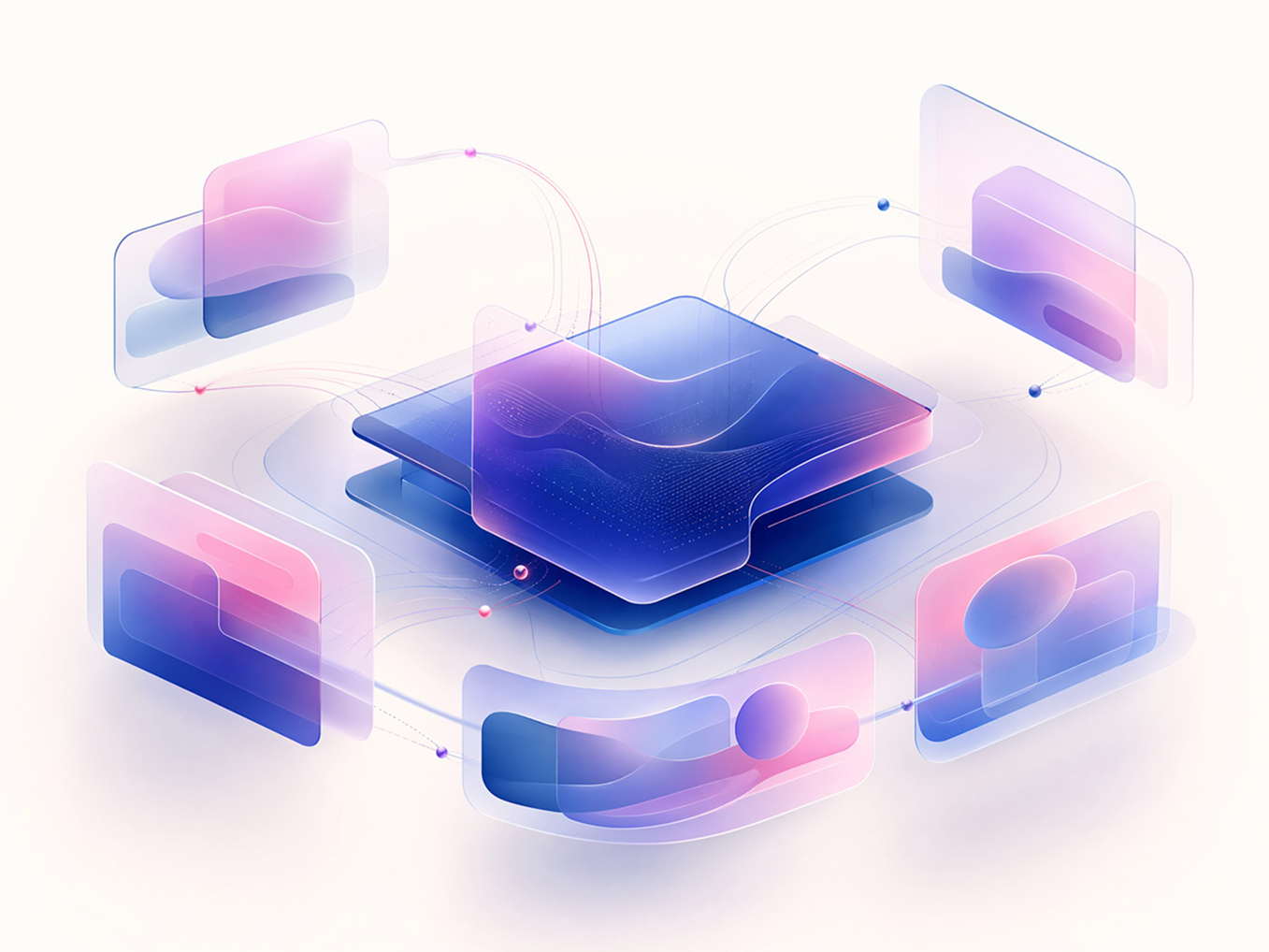
Not every app needs 3D elements, but pure flat design is losing its intuitive edge. We are seeing a massive shift towards Tactile & Spatial UI—interfaces that use depth, subtle glassmorphism, and realistic shadows to guide the user’s thumb naturally. It creates a hierarchy that feels physical, not just visual.
- Vibe: Clean but rigid
- Depth: 2D surfaces only
- Drawback: High cognitive load for navigation
- Vibe: Immersive & intuitive
- Depth: Layered Z-axis (Glass/Shadows)
- Benefit: Instantly obvious interactive zones
3. Micro-Interactions as the Language of Feedback
Finally, a great app design is defined by what happens between the clicks. A static button press is no longer enough. We advocate for Invisible UX—using haptic feedback, fluid state transitions, and micro-animations to confirm actions subconsciously. It transforms a digital tool into something that feels deeply satisfying to use.
Ready to upgrade your interface?
Stop settling for templates and start building for your actual users. If your product is already showing the signs it needs a UX redesign, and you need a partner to design intuitive, high-converting mobile and web apps, let’s review your UX.