Category: All
-
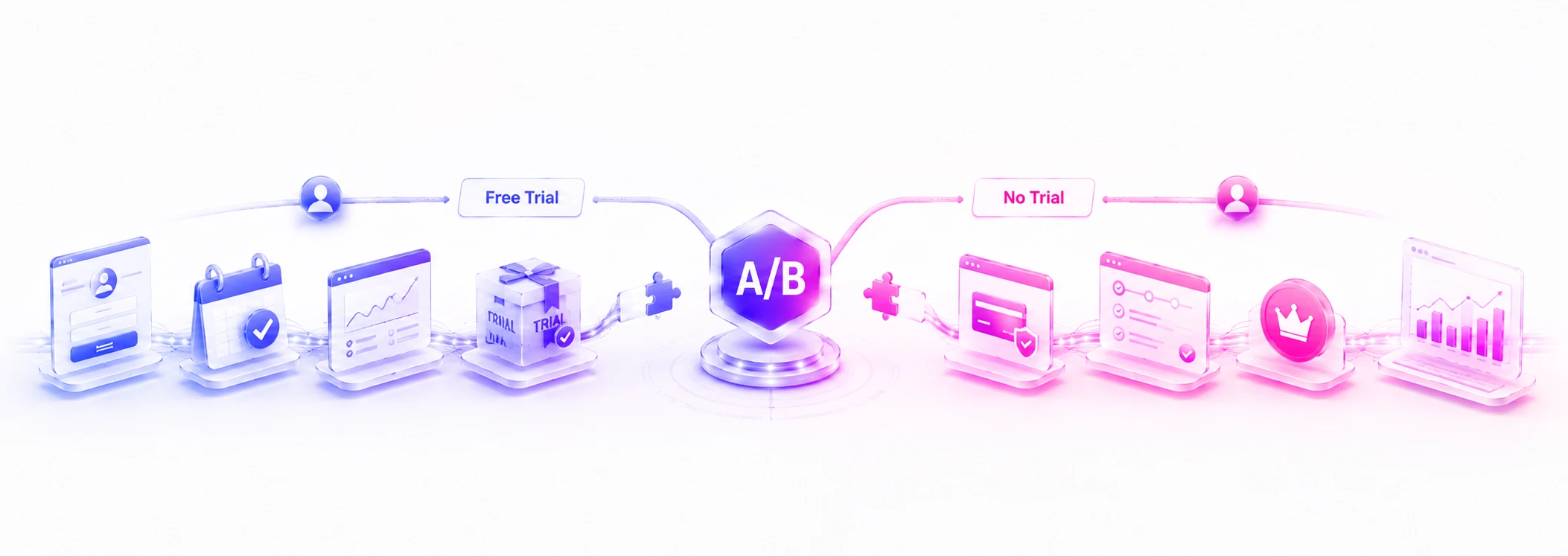
Free Trial vs. No Trial: Structuring Subscription Onboarding When You Can Only Test One Variable at a Time
Trial length, trial-vs-no-trial, and paid trials are three separate decisions that get conflated into one. What each actually changes, and how to test them without confounding your own results.
-

Firebase Security Rules for Vibe-Coded Apps: Why “Signed In” Is Not “Authorised”
AI-built app on Firebase? The rules probably say allow if true, or if request.auth != null — which means any signed-up user can read everyone’s data. The 60-second check, the owner-only rule set every app needs, and the deny-all catch-all the AI forgets.
-

The Vibe Coding Glossary for Founders: 35 Terms You Need Before Talking to an Engineer
RLS, env vars, staging, idempotent, CI, N+1 — the vocabulary a founder needs to talk about an AI-built app. Each term explained in plain English, why it matters to your app specifically, and the practical question to ask about your own.
-

Case Study: Rebuilding GO Car Rental Georgia for Search, AI Assistants and Direct Bookings
How we took a Tbilisi car rental site off its page builder, rebuilt 78 URLs as clean HTML, added a scripted booking assistant and first-touch attribution, and set up a weekly SEO loop driven by Search Console and GA4 data.
-

How to Learn Mechanistic Interpretability Without a PhD: A Self-Taught Developer’s Path
A five-stage path from zero to contributing in mechanistic interpretability, for working developers with no research background: Neuronpedia in the browser, a transformer from scratch, the ARENA curriculum, reproducing one real result, then SPAR or MATS. The tools, the habits, and how much maths you actually need.
-

Circuit Tracing: How Researchers Follow an AI’s Thoughts Step by Step (The Marble Run Explanation)
Circuits and attribution graphs let researchers watch a model plan a rhyme, add 36 + 59 in an unexpected way, and sometimes invent a story about its own reasoning. How circuit tracing works, the three most quoted findings, what it cannot do yet, and how to try it at home, explained with a marble run.
-

Neurons, Features and Superposition: Why an AI’s Neurons Don’t Mean One Thing Each (The Toy Box Explanation)
Researchers expected each neuron in an AI model to mean one thing. Instead, most mean many things at once. Neurons, features, superposition and the sparse autoencoder, the tool that untangles them, explained with a jumbled toy box and 500 cups. Plus what you can see for yourself on Neuronpedia.
-

Why Should You Care About Mechanistic Interpretability? 7 Reasons for Founders, Developers and Curious Humans
You are already trusting a machine nobody can inspect. Seven plain-English reasons to learn the basics of mechanistic interpretability: debugging AI features, catching a bluffing model, enterprise and regulatory questions, steering, reading AI news, a field you can start this weekend, and the question of minds.
-

What Is Mechanistic Interpretability? Looking Inside an AI’s Head, Explained Like You’re Six
Nobody fully understands how the AI models we use every day work, not even the people who built them. Mechanistic interpretability is the science of opening them up and finding out. What it is, the Golden Gate Bridge experiment, what researchers have found so far, and why it matters, explained with examples a six-year-old could…
-

How Much Does It Cost to Fix a Vibe-Coded App? Diagnostic, Hardening and Rebuild Explained
The cost of fixing an AI-built app depends less on how broken it is than on whether the data model can carry the roadmap. The three tiers — diagnostic, hardening, core rebuild — what moves the number inside each, and how to get a quote you can trust.